
How the Dunning-Kruger Effect Sabotages New Works (And How to Stop It)
We have all met that guy. He has a freshly minted seminary degree, a killer logo he designed on Canva, and a vision statement that uses the word "authentic" three times. He is absolutely certain that his church is going to be different. He isn't just going to plant a church; he is going to "take the city for Jesus!"
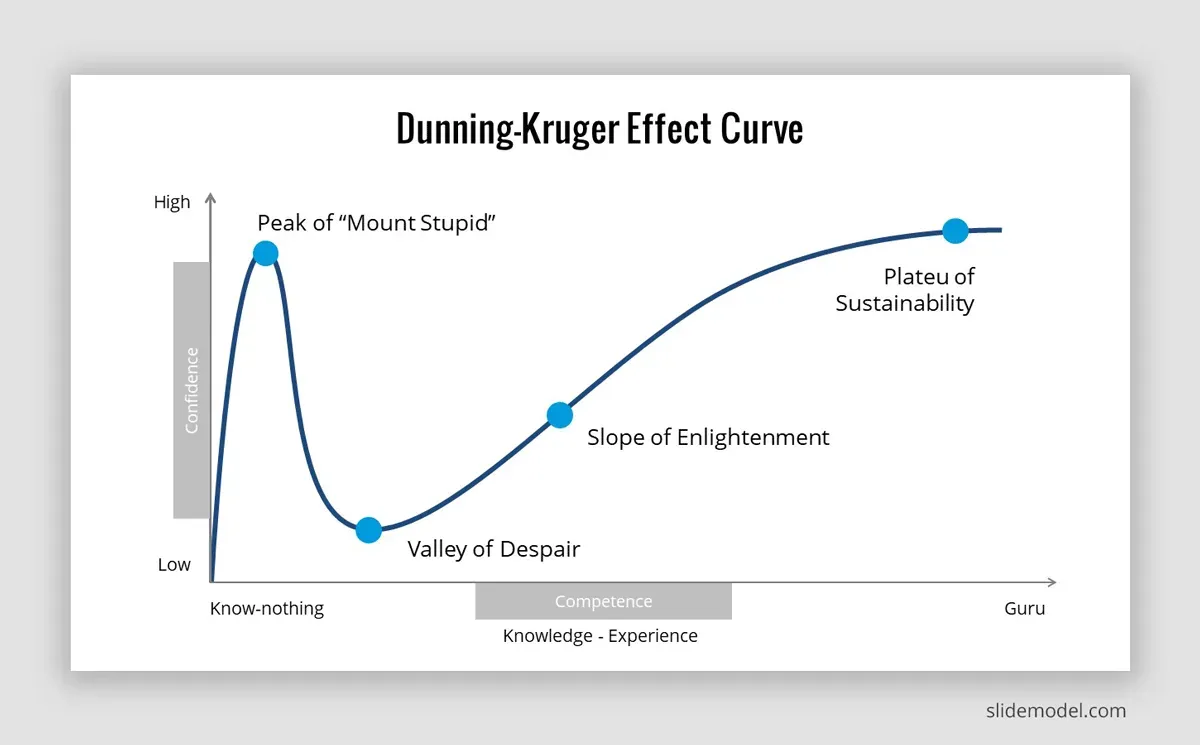
If you’ve ever felt even a hint of that energy in your own bloodstream… congratulations. You’ve visited the summit of what psychologists call the Dunning–Kruger Effect: the tendency for people who are new at something to overestimate how good they are at it, mainly because they don’t yet know what the skill actually requires.
This isn’t a character flaw. It’s a human flaw. And for church planters, it’s not just awkward—it’s expensive, exhausting, and sometimes fatal to the work.
Because early on, passion can impersonate competence. And “calling” and trust in God can quietly morph into “I’ve got this” and an overblown sense of what we can actually handle.
Why this hits church planters so hard
In the startup phase, you’re learning twelve jobs at once: preacher, recruiter, fundraiser, conflict mediator, facilities manager, strategist, HR department, counselor, visionary, spreadsheet adult, community builder, and occasional exorcist (of the soundboard wiring).
But when you haven’t done those jobs before, it’s easy to believe the formula is basically:
Preach the Word + Love People + Cool Coffee = Revival
Then reality arrives with a complaint (or a “concern”), a worship leader who quits, and a volunteer team that melts down.
The View from Mount Stupid
In the context of church planting, the peak of the Dunning-Kruger curve usually happens right before launch. You’ve read the books. You’ve listened to the podcasts. You’ve attended the conferences. You’ve got mental models. You feel ready.
And because you haven’t yet:
• built a volunteer system that doesn’t eat people alive,
• managed money when giving is irregular,
• handled conflict when everyone is tired and spiritualizing their issues,
• navigated bylaws, leases, insurance, child safety, and “helpful” opinions,
…you assume those things are simpler than they are.
In other words, you’ve overestimated your ability to lead because you have conflated preaching (something everyone tells you you’re great at) with leading (something you suddenly realize you’ve never really had to do before).
Three ways this can break you:
1. The "Field of Dreams" Fallacy
The high-confidence novice assumes that "if you build it, they will come." They pour resources into the Sunday morning experience (haze machines, mailers, top-tier sound equipment) believing that quality produces growth. When the community doesn't beat down the doors after week three, it’s all too easy to take it personally. Why? Because your confidence wasn’t built on actual relational equity or grounded expectations- it was built on the belief that your gifting would act like a magnet.
2. Financial Naivety
On Mount Stupid, budgets are always optimistic.
Giving is assumed to rise steadily. Big donor promises feel like contracts. Leases get signed based on “faith goals” instead of sober math. Reserves seem optional- because the future is going to be awesome.
Then summer hits. Or a donor moves. Or expenses stack up.
You didn’t plan for unknowns because you didn’t think you had unknowns.
3. Isolation and Burnout
This is the one that kills people.
Overconfidence makes feedback feel like resistance. Coaches feel like speed bumps. Boards feel like obstacles. Teammates become threats to the vision.
So you stop listening. You stop inviting honest critique. You start carrying everything yourself because, deep down, you’re convinced nobody else sees what you see.
Then crisis hits:
• the worship leader quits
• the trailer gets stolen
• someone leaves loudly
• your marriage starts paying the bill for your calling
• discouragement gets teeth
And now you don’t just have problems… you have them alone.
The Valley of Despair
Eventually reality corrects the curve.
You realize managing people is messy. Discipleship is slow. Systems matter. Conflict doesn’t resolve itself because you preached a banger.
This drop can feel like:
• depression
• numbness
• anger
• panic
• the sudden fantasy of selling insurance and buying a jet ski
But here’s the twist: this valley is often grace.
It’s the moment when confidence starts aligning with competence. You finally know enough to admit:
“I don’t actually know what I’m doing yet.”
And that honesty is the beginning of wisdom.
Climbing the Slope of Enlightenment
How do you avoid the worst crash and move toward real maturity faster? You practice metacognition (thinking about your thinking) on purpose.
1) Do a “pre-mortem” (before launch)
Most leaders do post-mortems after failure. Healthy planters do pre-mortems in their earliest days.
Try this:
“Imagine it’s one year from now and the church has closed. Write the story of exactly why it failed.”
Be specific. Painfully specific.
Not “spiritual warfare.” More like:
• “We staffed too fast.”
• “We leased too big.”
• “We didn’t build giving systems.”
• “We had no conflict process.”
• “We burned out volunteers.”
• “I didn’t Sabbath and became unrecognizable.”
This forces your brain to look for cracks while you still have time to reinforce the structure.
2) Audit your certainty
Pay attention to your language. If you speak in absolutes-
• “We will reach young families.”
• “People here are hungry for community.”
• “This neighborhood is ready.”
…you may be running on vibes.
Try shifting to probabilities:
• “Our strategy gives us a good chance to connect with young families.”
• “Here’s the data that suggests this area is underserved.”
• “Here are the assumptions we’re making, and how we’ll test them.”
Certainty feels spiritual. But it can also be blindness with Bible verses taped to it.
3) Keep an “Unknowns Ledger”
Make a literal list of what you don’t yet understand.
A rookie’s list is empty.
A veteran’s list is full.
Examples:
• “I don’t know how to confront a volunteer without detonating their small group.”
• “I don’t know how to read a balance sheet.”
• “I don’t know how to build a real pipeline for leaders.”
• “I don’t know local signage/zoning rules.”
• “I don’t know how to stop carrying emotional weight that isn’t mine.”
This doesn’t disqualify you. It proves you’re leaving Mount Stupid.
4) Diversify your “devil’s advocates”
If everyone on your launch team agrees with you, you don’t have a team.
You have an echo chamber with matching t-shirts.
Build in voices that don’t think like you:
• If you’re a visionary, get a practical operator who loves spreadsheets and hates hype.
• If you’re theological, get a business owner who asks, “Okay, but how will this function?”
• If you’re relational, get someone who can confront kindly and clearly.
Their job isn’t to crush your dream. Their job is to keep your balloon from popping at a higher (and more deadly) altitude.
A better kind of confidence
You need confidence to plant a church. No sane person does this without some crazy faith and holy stubbornness.
But there’s a difference between:
• fragile confidence based on ignorance, and
• durable confidence based on experience, feedback, and learning.
The goal isn’t to kill your faith or flatten your vision. The goal is to anchor it in reality, so when the winds blow (and they will), the house, and YOU, are still standing.
And here’s the line you need to tattoo on your soul:
Saying “I don’t know” isn’t a lack of faith.
It’s often the first step toward actual wisdom… and just the opening that God might be looking for in your heart.