New Churches
Bob Hyatt
February 24, 2017

In a continued sign of momentum in Ecclesia, we are excited to welcome two new congregations to our family – The Neighborhood Church in Garland, TX and Koinonia House in Pottstown, PA.   Both of these churches have been journeying with Ecclesia the last year and it’s a joy to make them and official part of the community.

The Neighborhood Church is located in the suburbs of Dallas and is seeking to follow Jesus for the sake of God’s kingdom in Garland, Texas.  Garland is a large suburb that happens to be one of the most ethnically diverse cities of its size in the U.S.  Their hope is that  The Neighborhood Church would look more and more like our Garland as they live into their name by walking alongside their neighbors in meaningful relationships.

Here is how Adam describes The Neighborhood Church …
“Our people are authentic, hospitable, and sacrificial. Some grew up in church, some were hurt by a church and have found healing, and others are completely new to church (even in the middle of the Bible belt). We try to live authentically with God and each other as a family. The church was planted by Mark Moore as Providence Community Church in a nearby city over a decade ago. We’ve changed our name and re-planted in Garland but the core practices of believing the gospel of the kingdom, belonging to one another, and blessing our city and world has been a constant through the years.

God has been so gracious to unite us together with a clear sense of who we’ve become and what we’re called to do. We want to be a faithful presence to those in need, to the marginalized, and to the de-churched. Since the Fall of 2015 we’ve partnered with a community center in one of the most economically disadvantaged areas of the city two miles from where we gather for worship. We’ve served in a variety of ways from after school programs, holiday parties, and VBS-style summer student weeks, but now we’re taking another step in our effort to be good neighbors for God’s kingdom by launching a Neighborhood Clothes Closet to meet needs and open more doors to relationships.

We are thrilled to be part of Ecclesia. After Pastor Bud Riddel and I (Adam) visited last year’s national gathering we were convinced we had found a nurturing and life-giving community that shared our heartbeat. Pastor Kathy Keasler (formerly of A New Community), Pastor Bud, and I can’t wait to develop new relationships within the network and to continue to grow our existing relationships. By God’s grace, we look forward to being God’s people together.”

Bob Hyatt, Director of Equipping and Spiritual Formation said, “I’ve always been impressed with the way the Neighborhood Church, planted in the heart of Church Country, has managed to be different. By living as a truly missional community they live out a real Kingdom alternative to the culture around them in a way that both challenges and inspires.”

In addition to TNC, Ecclesia is also enthusiastic to welcome Koinonia House to our movement.   Koinonia was planted by Jessica Clemmer and her husband Todd over a decade ago with a desire to “do church differently.”  They envisioned a community that was relationally centered, and shared life together built around faith.  In discussing their origins Jessica relayed,

“We thought we wanted to create an atmosphere where people who typically wouldn’t feel comfortable showing up at a traditional church would feel welcome. We wanted to be intentional about making space for the arts in church life, and wanted to be a place of blessing to our local communities. What we were really desiring was a fuller realization and living out of the Gospel, though at that point we didn’t have a paradigm for understanding or living that well.”

Throughout the years, Koinonia has begun to develop and lean into a fuller understanding of the Gospel; in that it wasn’t JUST for saving from hell to heaven, but that it was a process of partnering with God in the reconciliation and restoration of all things.  As this settled deeper into their core, they began to get ahold of the concept of missional living, feeling released to build and enjoy genuine relationships with people that were not part of our faith, which they could see cultivating much more openness to the Gospel.  J.R. Briggs, Director of Leadership & Congregational Formation has been walking alongside Koinonia in this last year.  J.R. shares, “It’s been a pleasure to spend time with the Koinonia House community- and it’s been a joy to call Jessi and Todd Clemmer friends for the past few years. After talking about Ecclesia with the Clemmers and their leaders for some time, I’m thrilled that Koinonia House is now officially a part of the network.”

After many years of meeting in different locations, now they are seeking to put down roots, and be present and stable for the communities in which we live and are involved.  On behalf of Koinonia , Jessica says, “We are excited about the ways that God has been connecting us with the greater Body, both in our local region, as well as through like-minded networking, such as Ecclesia. We are moving into a new season with great expectation, not of what we will be able to do FOR God, but rather, what we will be blessed to be able to do WITH Him.”

Ecclesia is excited to walk along with you in Koinonia and Neighborhood Church !

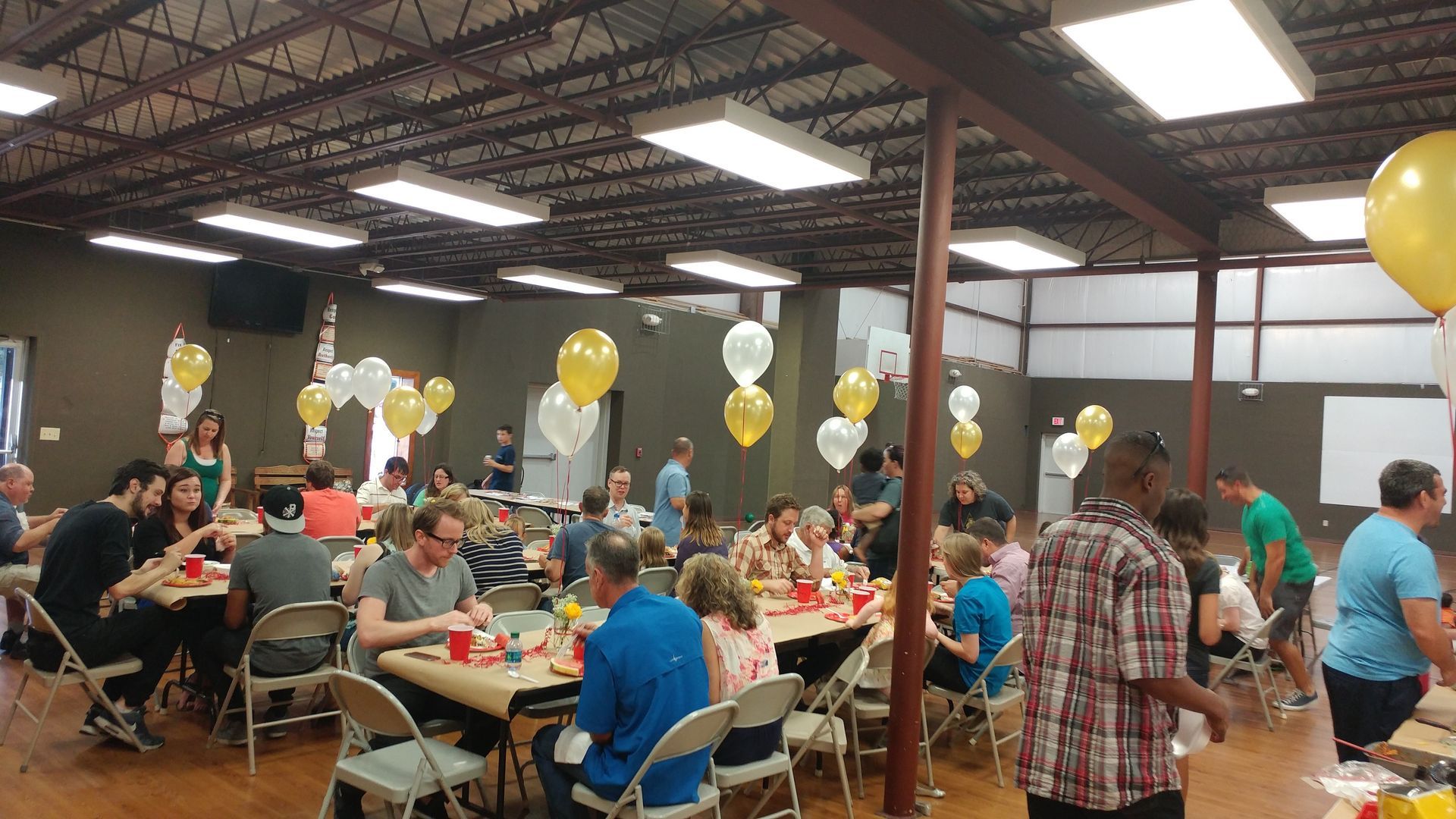
The Neighborhood Church in Garland, TX


By Bob Hyatt • October 7, 2026
“When God works in us nothing is useless, and nothing is spared.” - Jeannine Brown, Carla Dahl and Wendy Corbin Reuschling, Becoming Whole and Holy “There is no circumstance, no trouble, no testing, that can ever touch me until, first of all, it has gone past God and past Christ, right through to me. If it has come that far, it has come with great purpose, which I may not understand at the moment.” - Alan Redpath Here's something I've noticed about people as they get older: they tend to go one of two ways. They either get sweeter with age or they get crankier. They grow wiser and more like Jesus, or they grow bitter and more like the worst version of themselves. That's because life is formation. Everything we do and everything we go through shapes us one way or the other, mostly depending on how we respond to what happens to us, whether it's extraordinary or completely ordinary. Ministry works the same way. I've watched leaders come out of nearly identical trials in completely different shape. Some come out stronger. Others come out deeply wounded, discouraged, and ready to quit. The difference usually comes down to where they see God in the middle of the struggle, absent or present, and what questions they ask about it. Some ask, "God, why is this happening to me?" Others ask, "God, what could you want to form in me through this?" Both views of God will shape us, and so will both questions. They just shape us in very different directions. In my experience, the most common sin in church leadership is an obsession with numbers and results, paired with neglect of our own souls. On top of that, we rarely stop to notice how those numbers and results, and how ministry itself, are shaping us. So here's my suggestion: stop working so hard to develop your ministry and start noticing that your ministry is developing you. How you handle the realities of church leadership will determine not only what your church becomes but what you become. Leadership and ministry will form you. The only question is: into what? One tool God uses: the fishbowl Some people hesitate to become a pastor because it opens them up to scrutiny, and now and then to outright criticism. When I was a young leader, I hated the "fishbowl effect" of ministry. Everyone was watching me, and my mistakes seemed to count for a lot more than anyone else's. It felt deeply unfair that flaws that wouldn't even register at most people's jobs could cost me my job, my reputation, and my community. Never mind that maybe it bothered me so much because I had such a generous supply of those flaws. After years of living under the steady gaze of critics and cranks, I see the fishbowl differently. These days I actually welcome it. Richard Baxter, a Puritan pastor in the 1600s, put it this way: “While you are as lights set upon a hill, think not to lie hid... do your work as those that remember that the world looks on them... ready to make the worst of all... and to make faults where they cannot find them.”[1] Baxter understood that anyone who calls others to live like Jesus is going to get called out when they don't. His advice? Live like the world is watching, because it is. Some people in your life are ready to yell "Hypocrite!" at the first opportunity, to point out failings they share themselves, and, as Baxter says, even to invent faults when they can't find real ones. And Baxter's fishbowl had a few neighbors peering over the fence. Ours has a livestream, a comment section, and someone screenshotting the announcements. But Baxter goes further. He says we should be glad about it: “As you take yourselves for the lights of the churches, you may expect that men's eyes will be upon you. If other men may sin without observation, so cannot you. And you should thankfully consider how great a mercy this is, that you have so many eyes to watch over you, and so many ready to tell you of your faults; and thus have greater helps than others, at least for restraining you from sin. Though they may do it with a malicious mind, yet you have the advantage of it.” As a Pastor, you have more eyes on you and more people paying attention to how you live. That means you have more help than most in living well and avoiding sin. What some people mean for evil, God means for your good (Genesis 50:20). What looks like a downside of ministry turns out to be a path to maturity, to formation. In practical terms, living your life in front of others pushes you to do what you already know you should do. And it often keeps you out of things you might slide into if nobody were watching. One important caveat: embracing accountability isn't the same as tolerating abuse. Healthy scrutiny sharpens you. A congregant who attacks your spouse or treats your kids like church property is a different problem, and it calls for boundaries, not gratitude. Let's be clear, though: the fishbowl isn't enough on its own. What we're really after is internal: character, a changed heart. But knowing we're living out loud in front of a watching church and a watching world gives us structure, and that structure can help us build the habits and rhythms of holiness we want. As we try to let the heart and character of Christ take deeper root in us, we have the advantage of lots of eyes around us "encouraging" us to stay on the straight and narrow. My sense is that people who embrace this find that, over time, what starts on the outside moves more and more to the inside. Slowly, the choices we make because others are watching become, through habit, real character. Because I know people are watching, I think twice about what I say in public, what I scroll past on my phone, and how I talk to my kids at church or out on the sidewalk in front of the neighbors. More and more, those choices, first made because of an audience, become part of who I am. That's especially true when I treat those moments as kairos [2] moments: times when God breaks in and uses my awareness of a watching world to show me the character He wants to form in me and the choices He'd like me to make. But what if we don't embrace it? What about those who get shipwrecked by moral failure, character flaws, and private sins gone public? People who resent the fishbowl of ministry and the Christian life often end up living one way in public and another in private. It's as if their anger at being scrutinized pushes them into a divided life: they'll play by the rules in public but insist on their own rules in private. Frustrated with the audience around them, so eager to find fault, they forget the true Audience they live before. And as we've all seen from too many spectacular crash-and-burns, the fallout is often devastating. Families, churches, and the reputation of the whole Church take serious damage. Pastors, recognize that your formation is happening, one way or another… and make peace with the fishbowl. It's going to be there whether you like it or not. If you embrace it, you may find it spurring you on toward love and good deeds (Hebrews 10:24) and keeping you clear of the sins that have taken down so many in ministry before you. “You should thankfully consider how great a mercy this is, that you have so many eyes to watch over you.” Let the Holy Spirit use your public life, and every eye watching it, to shape and form you. The fishbowl and the formation of a life in ministry are coming either way. Let them help answer the question: into what? To further explore your own formation through ministry, join us at the Multiply Summit with special guest Rich Villodas this coming February in the Washington, D.C. area! Adapted from Eldership and the Mission of God by Bob Hyatt and J.R. Briggs. [1] Richard Baxter, The Reformed Pastor, London, 1657, p. 21. [2] Kairos is one of the Greek words for time, but it's different from chronos. Chronos is linear, calendar time. Kairos refers to significant moments full of possibility. Here, it means those times when God steps into chronos.
By Bob Hyatt • April 13, 2026
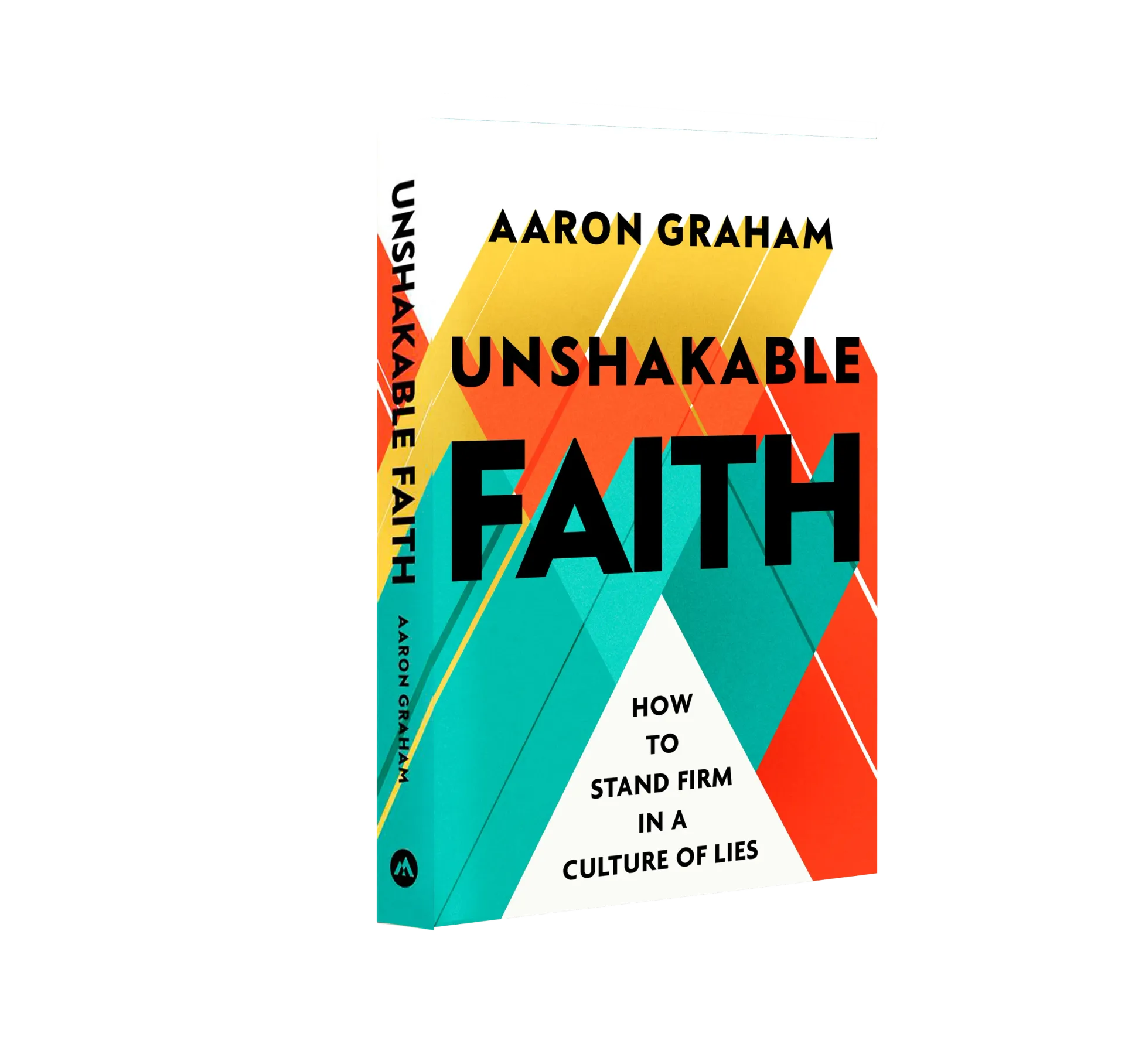
Here's a message from Ecclesia Pastor Aaron Graham