News from around the Ecclesia Network
Ecclesia Network
December 21, 2018

Redemption Church, Bristol PA

Weekly Worship, Meeting God

In September, Redemption switched back to a weekly worship service after six years of meeting in house churches.  We loved house churches, but after a careful discernment process, we decided God was calling us into something new.  We hope the switch is a way to care better for our kids, open the door for the community of Bristol, and take advantage of the talented teachers, liturgists, and musicians we now have at Redemption.  But more than that, we hope the switch is an opportunity to meet God.  While house church specializes in intimacy with one another, in discernment, we discovered a deep longing for intimacy with God – a desire to be drawn into something bigger than ourselves. We are still committed to discipleship, to local mission, and to intimate community.  But all those things are meaningless without a relationship to the Living God.  So we have prayed that God would meet us in worship.  And four months in, God has been answering that prayer abundantly!  Amen.


Austin Mustard Seed, Austin TX

At Austin Mustard Seed we’ve had a lot to celebrate lately. There have been many changes in our leadership since the summer. Throughout the process, we’ve had a clear sense of God’s presence and feel gratitude for God’s direction and provision. We believe it is gratitude that gives us joy, and we are thankful to experience shared joy as a community this Advent season.

This month we commissioned four leaders in our church. On December 2, April Karli and Daniel Read were commissioned as pastors, and on December 9, Ashley Blackwell and Shane Blackshear were commissioned as lay pastors.


Update From The Crowded House

“Central Florida doesn’t need another worship gathering.”

I remember uttering those words to countless people two years ago when Crystal and I decided to launch The Crowded House Network. We believed those words then and we believe those words now.

Central Florida does not need another worship gathering but The Crowded House Network does. Over the past few years we have grown from a small gathering of young adults on Tuesday nights, to an inter-generational church consisting of three house churches throughout Central Florida. Our dream is that The Crowded House be a spiritual family on mission together. This was easy to accomplish with eight people on a Tuesday night. Living into this way of being the church when we are three house churches spread out across Central Florida is anything but easy.

In order for us to live into the dream of being a spiritual family on mission together, our leadership team has made the decision to lead us into a new kind of gathering to complete all the good that is happening in our house churches.

On the first and third Sundays of every month, we will gather as an entire network to sing songs of praise, offer prayers for one another, proclaim the good news, and partake of the Eucharist. While this will have similar elements to other church worship gatherings, our focus on communal spiritual growth, corporate prayers and participation, and sacramental theology will make this gathering unmistakably The Crowded House.

This is an exciting time for us as a church. We are stepping into something new and unexplored for us. Just as we had the audacious dream to start a network of house churches in a land of traditional churches, we are exploring what is next as we continue to develop as a family on mission together.


The Renew Community, Lansdale PA

Recently, The Renew Community held a “Blue Christmas” Potluck/Gathering

Blue Christmas is a special service to acknowledge that for many people, Christmas is a time of loneliness, sorrow, alienation, sadness. This service offers a way for people to claim those feelings and still feel surrounded by the compassionate love of God. Afterwards, we will share a meal together. If you would like to provide part of this meal, please sign up for an item to bring.

If you want to know more about this, or even how your church can serve the grieving during the holidays, check out this webinar from Missio Alliance with Ecclesia’s own Kate Blackshear (from Austin Mustard Seed)-  Download/Watch FREE until Dec 31st.

Reminder… 

We encourage all our churches, during difficult or stressful times in their community to remember that they have the resources of a network to draw on.  Your Ecclesia staff members (Chris Backert, J.R. Briggs and Bob Hyatt) are ready and available to help you navigate whatever you are facing!

By Bob Hyatt • October 7, 2026
“When God works in us nothing is useless, and nothing is spared.” - Jeannine Brown, Carla Dahl and Wendy Corbin Reuschling, Becoming Whole and Holy “There is no circumstance, no trouble, no testing, that can ever touch me until, first of all, it has gone past God and past Christ, right through to me. If it has come that far, it has come with great purpose, which I may not understand at the moment.” - Alan Redpath Here's something I've noticed about people as they get older: they tend to go one of two ways. They either get sweeter with age or they get crankier. They grow wiser and more like Jesus, or they grow bitter and more like the worst version of themselves. That's because life is formation. Everything we do and everything we go through shapes us one way or the other, mostly depending on how we respond to what happens to us, whether it's extraordinary or completely ordinary. Ministry works the same way. I've watched leaders come out of nearly identical trials in completely different shape. Some come out stronger. Others come out deeply wounded, discouraged, and ready to quit. The difference usually comes down to where they see God in the middle of the struggle, absent or present, and what questions they ask about it. Some ask, "God, why is this happening to me?" Others ask, "God, what could you want to form in me through this?" Both views of God will shape us, and so will both questions. They just shape us in very different directions. In my experience, the most common sin in church leadership is an obsession with numbers and results, paired with neglect of our own souls. On top of that, we rarely stop to notice how those numbers and results, and how ministry itself, are shaping us. So here's my suggestion: stop working so hard to develop your ministry and start noticing that your ministry is developing you. How you handle the realities of church leadership will determine not only what your church becomes but what you become. Leadership and ministry will form you. The only question is: into what? One tool God uses: the fishbowl Some people hesitate to become a pastor because it opens them up to scrutiny, and now and then to outright criticism. When I was a young leader, I hated the "fishbowl effect" of ministry. Everyone was watching me, and my mistakes seemed to count for a lot more than anyone else's. It felt deeply unfair that flaws that wouldn't even register at most people's jobs could cost me my job, my reputation, and my community. Never mind that maybe it bothered me so much because I had such a generous supply of those flaws. After years of living under the steady gaze of critics and cranks, I see the fishbowl differently. These days I actually welcome it. Richard Baxter, a Puritan pastor in the 1600s, put it this way: “While you are as lights set upon a hill, think not to lie hid... do your work as those that remember that the world looks on them... ready to make the worst of all... and to make faults where they cannot find them.”[1] Baxter understood that anyone who calls others to live like Jesus is going to get called out when they don't. His advice? Live like the world is watching, because it is. Some people in your life are ready to yell "Hypocrite!" at the first opportunity, to point out failings they share themselves, and, as Baxter says, even to invent faults when they can't find real ones. And Baxter's fishbowl had a few neighbors peering over the fence. Ours has a livestream, a comment section, and someone screenshotting the announcements. But Baxter goes further. He says we should be glad about it: “As you take yourselves for the lights of the churches, you may expect that men's eyes will be upon you. If other men may sin without observation, so cannot you. And you should thankfully consider how great a mercy this is, that you have so many eyes to watch over you, and so many ready to tell you of your faults; and thus have greater helps than others, at least for restraining you from sin. Though they may do it with a malicious mind, yet you have the advantage of it.” As a Pastor, you have more eyes on you and more people paying attention to how you live. That means you have more help than most in living well and avoiding sin. What some people mean for evil, God means for your good (Genesis 50:20). What looks like a downside of ministry turns out to be a path to maturity, to formation. In practical terms, living your life in front of others pushes you to do what you already know you should do. And it often keeps you out of things you might slide into if nobody were watching. One important caveat: embracing accountability isn't the same as tolerating abuse. Healthy scrutiny sharpens you. A congregant who attacks your spouse or treats your kids like church property is a different problem, and it calls for boundaries, not gratitude. Let's be clear, though: the fishbowl isn't enough on its own. What we're really after is internal: character, a changed heart. But knowing we're living out loud in front of a watching church and a watching world gives us structure, and that structure can help us build the habits and rhythms of holiness we want. As we try to let the heart and character of Christ take deeper root in us, we have the advantage of lots of eyes around us "encouraging" us to stay on the straight and narrow. My sense is that people who embrace this find that, over time, what starts on the outside moves more and more to the inside. Slowly, the choices we make because others are watching become, through habit, real character. Because I know people are watching, I think twice about what I say in public, what I scroll past on my phone, and how I talk to my kids at church or out on the sidewalk in front of the neighbors. More and more, those choices, first made because of an audience, become part of who I am. That's especially true when I treat those moments as kairos [2] moments: times when God breaks in and uses my awareness of a watching world to show me the character He wants to form in me and the choices He'd like me to make. But what if we don't embrace it? What about those who get shipwrecked by moral failure, character flaws, and private sins gone public? People who resent the fishbowl of ministry and the Christian life often end up living one way in public and another in private. It's as if their anger at being scrutinized pushes them into a divided life: they'll play by the rules in public but insist on their own rules in private. Frustrated with the audience around them, so eager to find fault, they forget the true Audience they live before. And as we've all seen from too many spectacular crash-and-burns, the fallout is often devastating. Families, churches, and the reputation of the whole Church take serious damage. Pastors, recognize that your formation is happening, one way or another… and make peace with the fishbowl. It's going to be there whether you like it or not. If you embrace it, you may find it spurring you on toward love and good deeds (Hebrews 10:24) and keeping you clear of the sins that have taken down so many in ministry before you. “You should thankfully consider how great a mercy this is, that you have so many eyes to watch over you.” Let the Holy Spirit use your public life, and every eye watching it, to shape and form you. The fishbowl and the formation of a life in ministry are coming either way. Let them help answer the question: into what? To further explore your own formation through ministry, join us at the Multiply Summit with special guest Rich Villodas this coming February in the Washington, D.C. area! Adapted from Eldership and the Mission of God by Bob Hyatt and J.R. Briggs. [1] Richard Baxter, The Reformed Pastor, London, 1657, p. 21. [2] Kairos is one of the Greek words for time, but it's different from chronos. Chronos is linear, calendar time. Kairos refers to significant moments full of possibility. Here, it means those times when God steps into chronos.
By Bob Hyatt • April 13, 2026
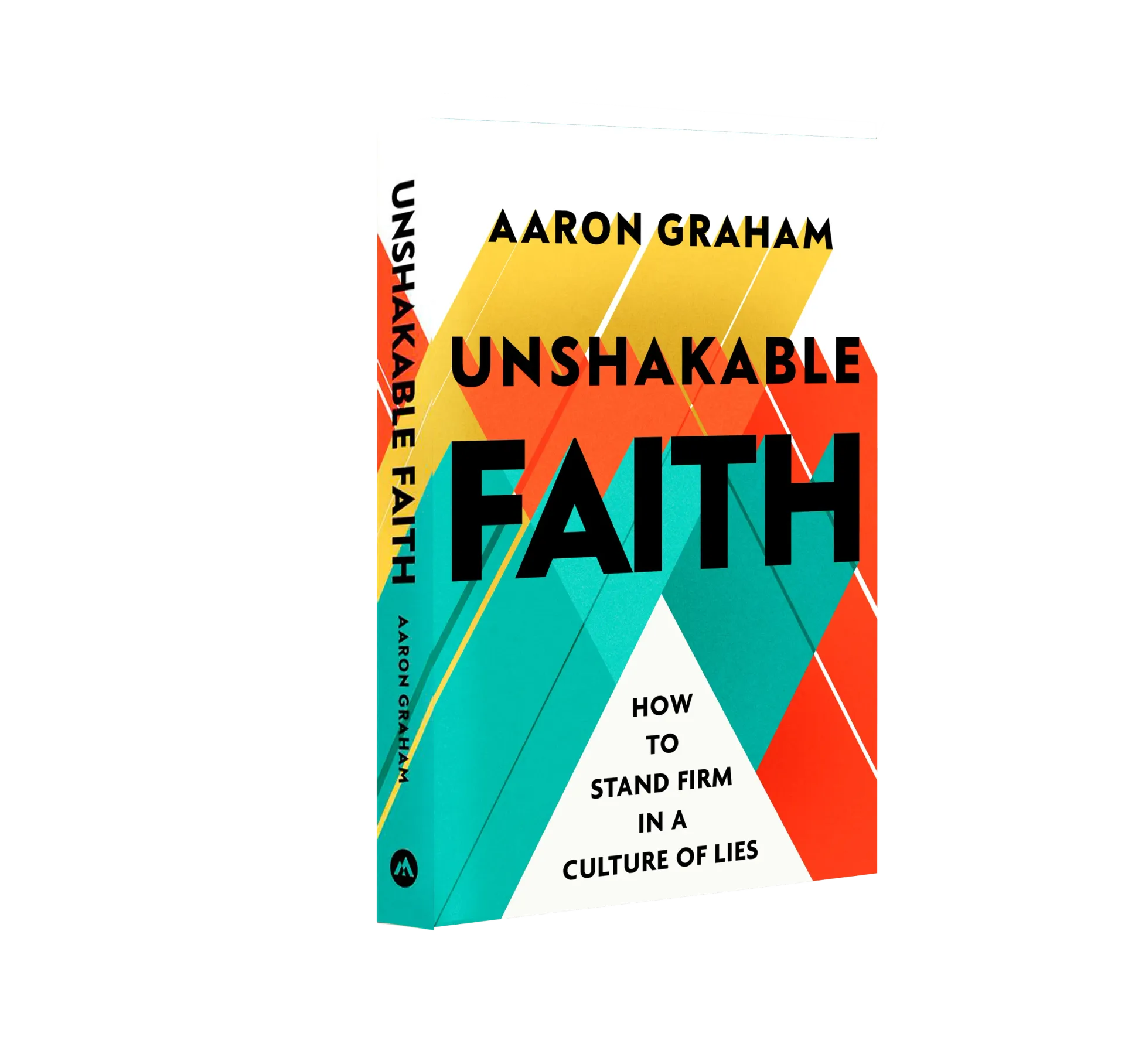
Here's a message from Ecclesia Pastor Aaron Graham